The culture of one of the most beautiful places on the planet, the Caribbean islands, reflects the region’s history and a plethora of influences. Caribbean art, and its production of paintings, drawings, prints, and sculpture, suggests an existence of different streams inside one big river. This comes as no surprise since the term Caribbean art defines the production of all the islands and artists whose heritage returns them back to the region. Influenced by its past, and its geographical position, the rich production, similarly to the production of the African artists, is still considered as mysterious and unexplored by the major art players.
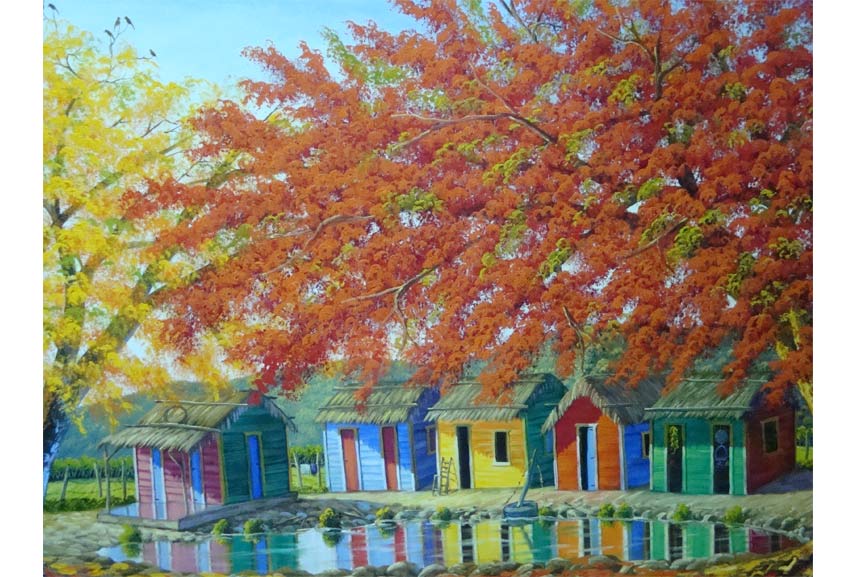
Unknown author – Example of the painting produced in the Dominican Republic . Image via locagringa.com
All the Islands of the Caribbean
As mentioned above, the term Caribbean art defines the art of artists who live or who are from the Caribbean. This includes the islands of Anguilla, Antigua, Barbuda, Aruba, Bahamas, Barbados, Bonaire, British Virgin Islands, Cayman Islands, Curaçao, Dominica, Dominican Republic, Grenada, Guadeloupe, Haiti, Jamaica, Martinique, Montserrat, Puerto Rico, Saba, Saint-Barthélemy, Saint Eustatius, Saint Kitts and Nevis, Saint Lucia, Saint Martin, Saint Vincent and the Grenadines, Saint Maarten, Trinidad and Tobago, Turks and Caicos Islands, and the United States Virgin Islands.
The identity of each island is unique yet shaped by the influences of European colonialists, the African heritage of slaves and the legacy of the native Indian tribes[1]. Such mix of cultures, its diaspora and shifting socio-political realities make influence and help to shape the Caribbean history and identity.
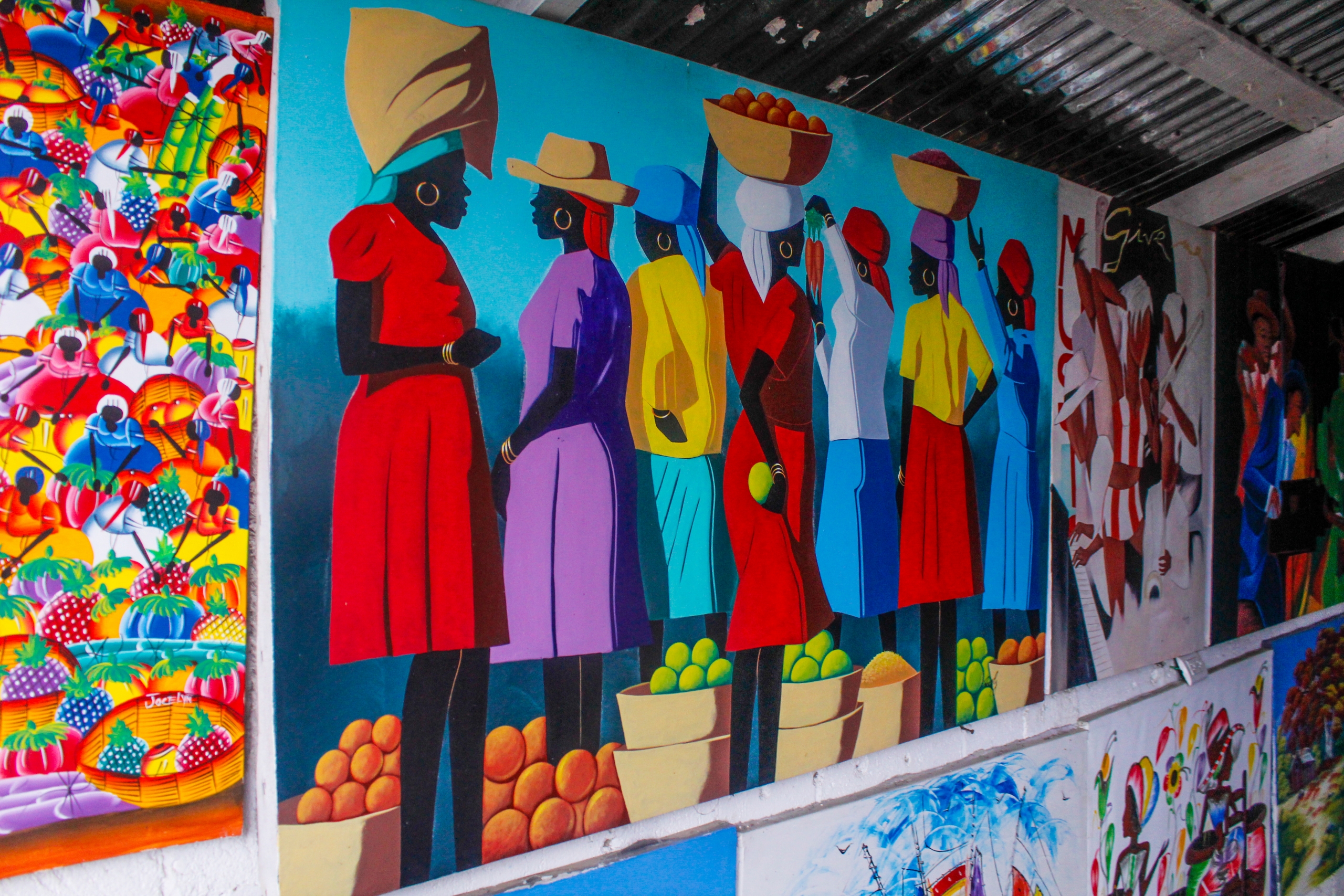
Haitian Art : Haiti and Port-Au-Prince. Image via pinterest.com
Example of Dominican Republic Art. Image via locagringa.com